Muscle Memory

All you have to do to be thankful not to have to think of each motion you make is to watch a young child learning to navigate a fork or spoon to reach the mouth without dumping the contents. One fist clutches the handle as he tries to get food in place. Her eyes almost cross as she watches how it comes up. Along the way the utensil tips. Spaghetti (usually) falls, and the alternate hand picks up what was spilled to complete the feeding process. Life every day is easier by not having to plan again how to brush our teeth, shave a face, or even pick up feet to walk. Those of us who know how to keyboard may have an advantage over hunt and peck, yet both can develop enough skill to make the task easier A purpose existed in learning the thumb under motion for scales on the piano and one doesn’t have to create new ways to fold towels taken from the dryer.

I think of two stories of mind programming muscles. Husband David had West Nile Virus. After three weeks of missing most of the world, rehab began reteaching some skills. The therapist sat him on the edge of the bed, crossed a foot over the opposite knee, put on a real shoe, and said, ‘Tie it.” Time after time it didn’t happen. He was shaking his head in frustration when my mind flashed a picture of what he used to do every morning. “He never picked up his foot to tie the shoe. He kept it on the floor and leaned over.” She moved David to a chair and gave the same command. He reached down without hesitation, tied the shoe, and looked up beaming. Why had we had ever doubted him?

The other story comes from an allusion, a literary term defining the world knowledge all should know, but I didn’t. I was trying to explain to 8th graders that if they would follow a certain sequence understanding a sentence would be easier. An I get it voice said, “Like wax on, wax off.” Now I didn’t get it. “Haven’t you seen Karate Kid, Mrs. Smith.” I did that very night and gave him 10 extra points the next day. The motion with opposite hands became routine and could be called up automatically when needed. Think of that the next time you slice a banana on cereal while solving a morning problem for some age child.

In Spanish, one doesn’t do exercise, one makes it. I will make myself learn the motion for tying a square knot, a granny knot, and a slip knot and when to choose each. The brain has a muscle that helps give auto default to behavior choices. A teen was complimented for being so cheerful. “I work on it.” If our go to setting is be kind, be thoughtful, be helpful, then that selection happens as if the send button has been pushed. In English we do say make good decisions. Do or make, both build muscle memories.

Therefore strengthen your feeble arms and knees. Hebrews 12:12

Be kind and compassionate to one another. Ephesians 4:32

Wait

Other words were written already for this reading. Those will have to wait because wait as a title was the word I dreamed all last night. That one syllable creates tension whether anticipation of coming delight or anxiety of a unknown future. We who live in a storm area spent the day preparing. Some had to add moving on to out of danger areas to the already upheaval of a virus that can creep in weak places. Others just checked a supply of batteries and peanut butter. Various news of where there be dragons and how they were moving defined our actions during the day. It’s only Wednesday. Laura is coming. Don’t wait to prepare. Wait for her to arrive.

Saturday I had a Bradford pear cut down at the corner of the house. Through the years, growth had intwined branches between electric wires from the easement to the house. Any gust could cause a snap that would leave me in darkness. Tuesday, I made a list and did those things that years had taught me. I walked around the yard and moved pots and chairs that could become flying objects. The bin that held pruning and clippings was rehoused to the garage along with the trash cans. A true mess would be picking up their wet contents. A final look revealed a wreath on the front door that could be teased off its hook.

Though I am always tense about where an eye comes ashore and what havoc that force will wreck on those in that area, my personal history with hurricanes has been one surviving a natural weather phenomenon without damaging results. Several storms came through Hammond while I was a child. I remember sitting with my daddy, watching wind drive rain again louvered windows and then walking town to check on tree damage. In 1957, a June hurricane created stories for college friends from Lake Charles coming back in the fall. Ike wiped out power on Rice Blvd. for a week. Amazingly, temperatures were moderate, and we cooked on a hibachi and managed.

As of now, I am back to waiting. Prognostications say rain at 3:00 this afternoon and through the morning tomorrow. We’ll see. I’ve started a new list: people who have fled to a safer place, people who are caught in surges and heavy winds; struggling businesses facing new challenges, and those first responders we count on to be helpers. I can only picture unknown people and, in my waiting, ask God to be their refuge and strength in this very present trouble.

We will not fear though the earth should change, though the mountains shake in the heart of the sea; though its water roar and foam, though mountains tremble with its tumult. Psalm 46:2-3

Chunk Change

The phrase removes any value from the coins that are collected during a day. They are only kept to keep from breaking the extra dollar when the cost is $5.18. In the evening, men, especially, empty pockets and pile them on a dresser. Some families collect until a jar is full and add them up to see if there are enough for a treat. My church had drive by togetherness on Sunday. We honked and waved at each other as we circled between cones. I dropped off masks I had made at one station and picked up a card with a church member name to contact at another.

Someone’s brilliant idea was for all of us to turn in coins to go to an organization that supplies lunches for poverty people. I had been stockpiling change in a wooden “Dime Box” that was husband David’s side line deal at one time. A friend who lives farther from church consigned her mahjong coins for me to donate. The line slowed as we went under tents that collected the offerings. Most people wanted to look in the bin and see how the contents were growing. Children giggled as they tossed a plastic sack or some even screeched as they dumped their bags over to hear and see the coins scatter in the mix. This seemed like a feel good way to help without doing much.

I came away aware “Here’s my penny,” was not enough. We can be penny pinchers or penny saved, a pound earned people. Either way takes care of ourselves. I was forced to think a diversity of essential yearnings: hunger, shelter, providing the sustaining grace of worship. Our church offering will help buy bread and fruit, and each day in a variety of places other consistent gifts are needed. Mother Teresa left her monastery to start Sisters of Charity with two pennies. She was asked what she could possibly do with two pennies. She said, ” Nothing. But with two pennies, and God, I can do anything.” The coins I gave are a reminder that I need to move as I can beyond “chunk change.”

A Story From Another Time

 Now, friends, I want to report on the surprising and generous ways in which God is working in the churches in Macedonia province. Fierce troubles came down on the people of those churches, pushing them to the very limit. The trial exposed their true colors: They were incredibly happy, though desperately poor. The pressure triggered something totally unexpected: an outpouring of pure and generous gifts.  I was there and saw it for myself. They gave offerings of whatever they could – far more than they could afford! –  pleading for the privilege of helping out in the relief of poor Christians. This was totally spontaneous, entirely their own idea, and caught us completely off guard. What explains it was that they had first given themselves unreservedly to God and to us. The other giving simply flowed out of the purposes of God working in their lives. 2 Corinthians 8:1-5

Pimento Jars etc.

I had three comfort foods growing up: poached eggs, condensed milk lemon pie, and my mother’s version of pimento cheese sandwiches. The eggs and pie I can have at times, though the memory is stronger than the present tasting. The pimento cheese sandwiches I’ve never even tried. For them to be their best, timing is everything. I need to have rolled my car down the driveway some winter night after a four and a half hour drive from Shreveport. Daddy would open the side screen porch door and take my suitcase while Mother would say, “Wash and sit, and all will be ready.”

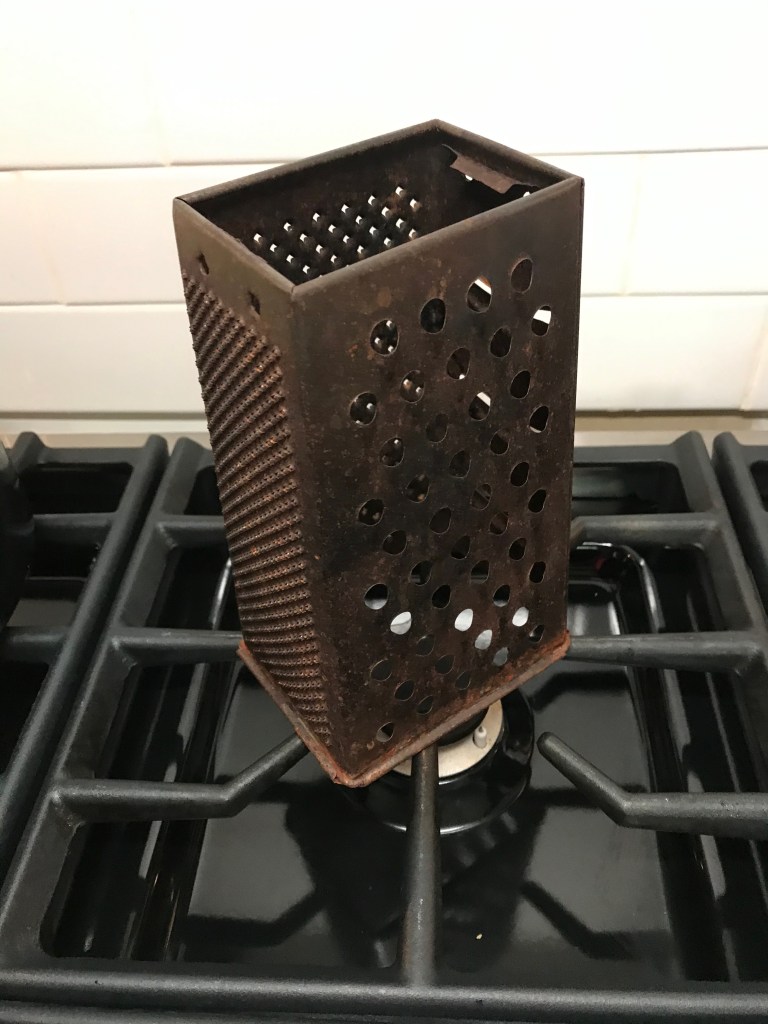
The ingredients were always on hand. A jar of pimentos, some fresh white and wheat bread, a block of strong cheddar cheese, mayonnaise, and a bottle of Worcestershire Sauce. The cheese was grated on a rusty four sided grater I still use. All was combined in the smaller pink bowl of a blue, green, pink mixing bowl set. My daughter still has the bowl. Chop the pimento, add enough mayonnaise, a pinch of salt, and two shakes of the Worcestershire Sauce. (Rabbit chase: I’ve heard of another bottle of Tabasco. Has anyone ever replaced Worcestershire?) Smoosh that mixture with a spoon back until smooth. Make a three layer sandwich with the wheat bread in the center. Then the special secret. Trim off all the crusts; something done for no other sandwich. Put on a baking sheet and run under a broiler, turning once until cheese is soft and the bread crispy. The first bite with the combination of smell and taste makes everything wrong right again.

With the kitchen cleaned up, prepare the pimento jar for its second life. After a hot soapy water wash, place the jar and the lid in the kitchen window to air dry. The next morning put it in the pantry under the attic stairs with others to be ready for use. Tiny leftovers could help start a light lunch another day. The last scrapings from a larger jar would be more easily reached in a smaller container. Daddy needed a home for odd screws and nails. Bobbye pins didn’t need to be scattered on a dresser top. Options were infinite, and a solution was at hand.

Horrors, I could and did buy ready made pimento cheese for the few times I offered it to a marginally interested family. The nearest jar that size that I have for a “just in case” emergency held chopped garlic. Nowadays, to deal with left overs and times that we send bits home with some one else, we use plastic HEB and rubbermaid keepers. Their sizes vary and with that comes the challenge of matching lids to the bottoms. Yet, the recepticles help us save, freeze, share. In an age where a supermarket can always meet a lack, perhaps these containers remind us of a deep-seated compulsion not to be wasteful, a left over urge from the time that apples were in the attic and potatoes in the cellar to prepare for a winter ahead. In other words, plan ahead, be prepared.

 You lazy fool, look at an ant. Watch it closely; let it teach you a thing or two. Nobody has to tell it what to do.  All summer it stores up food; at harvest it stockpiles provisions.

Proverbs 6: 6-8

Love Those Grains

The recipe for a souffle keeps reminding, “Be careful or it will fall.” With three children and a husband who never got to a table at the same time or on time, I just turned that page and moved on. Eventually I learned hot bread was my forte. First, perfection didn’t matter. The brown crust didn’t have to always be the exact shade as previously. Second, all dinner rolls didn’t have to be exactly the same shape, just approximately the same size. Last, the recipes allowed for some tweaking or variations or even mistakes. Options existed for different grains and additions from raisins to olives.

Icebox pocket rolls were my first venture. My mother held the standard. She used cake yeast and tested the warm water on her wrist. I couldn’t even begin to match her until I found a $1.00 booklet at the checkout counter of the grocery store. I bought a thermometer and a bottle of Active Dry Yeast. Would anyone buy non-active dry yeast? Following directions and some practice enabled me to make a pan, put in fridge overnight, and serve up hot rolls as if by magic.

Making bread sits at the top of my restorative activities. The sequence allows for moments of rest: mix, let rise, punch down and shape, let rise and bake. Kneading releases any tension of the day and provides not only agitation for the yeast, but also for me the rhythmical calming of repetitive action. Tweaking the recipe is possible without looking up what someone else has tried. Experiments with cinnamon/sugar to jalepanos have all been welcomed. Planning to have the kitchen empty when removing from the oven requires strategy. Resisting the impulse to cut hot bread is nigh impossible.

Cornbread must be mentioned. Variations abound from hushpuppies to toss to dogs under the table to the drier corn pones. I’m talking about yellow meal cornbread made in an iron skillet that has a history and has been throughly seasoned. A skill is required to balance the crumble and the hold togetherness of the finished product. Experts can balance a plate on top of the skillet. flip, and the cornbread comes out a perfect, bottom up circle. I’m not there yet. I just put the skillet on a hot pad and each person cuts a slice and slides a spatula underneath to move to their plate. Of course, the slice needs enough height to cut in half and hold butter and jelly, gravy, or the juice from black eyed peas or pot likker from greens of the season. Hummmm, good.

The part I may like best about these three offerings is they grow and change. From being a lump to a flat covering in a skillet, they rise and grow and create a whole new aromatic accompaniment to a meal The Bible doesn’t say approving words about leven- the yeast and baking powder that create the change. If you’re getting ready for a 40 year journey you don’t have time to stick around for a process. If the something arising new is not good like the judgemental attitudes of the Scribes and Pharisees, don’t be like that. Even Paul says to be puffed up with boasting can mess up a whole situation. Yet, a pandemic gives me time to be involved in creating an offering of love. To join in around a table is called breaking bread together, The specifics can range from matzah to pita to tortillas, to naan, or to my just baked loaf. Life giving sustenance is what counts.

For the bread of God is that which comes down from heaven and gives life to the world….Jesus said to them,”I am the bread of life.” John 6: 33, 35

Safe Topic

Proper Victorian maidens were told a permissible remark to their dinner partner was “The weather is seasonable for this time of year. Don’t you think so?” The knowledge of weather in places we are has always been needful and necessary to those who are farmers or sailors or planners of outdoor picnics. In recent years, what it is like in other place has because more possible to know and has increased in importance. Every phone conversation with my dad began with the question, “What’s your weather like.” It sounded as if I were personally responsible. Not until we had compared south Louisiana with Houston, Texas, could we more on to another topic, like his grandchildren.

Early guessing of weather was iffy at best- and in some cases still so. A few of the ideas were pure superstition. There is a scientific reason for Red sky at night, sailors’ delight. Red sky in the morn, sailors take warn. I doubt that the man quoting those words knew why they were to be trusted. The signs were true enough to be repeated and believed. If the crescent moon has enough curve to hold a hunter’s horn, a dry spell is on the way.

First newspapers, then radio, television still in the mix, and now, of course, the internet, supposedly take the guess work out of knowing. However when heavy rain is pelting outside and the voice on the station is saying no precipitation in the forecast, a member of our family declares: “Weathermen don’t have windows.” Some local weathermen, though, do build a certain respect. My mother turned the fire down under supper and went to sit by the TV to hear Nash Roberts at 6:00. He told about New Orleans and then said, “Now the forecast for north of the lake.” Sid Roberts was our children’s favorite mainly because he tracked the course of Santa Claus on Christmas Eve.

Our activities are planned by the probabilities of the day. The temperature may be acceptable, yet mix in humidity, and my walk gets rethought. I made a grocery run to hunker down for Hanna which threaded the needle of the Gulf to rain on us and move on to flood the lower coast. We teach our children the difference in weather and climate. The changes of the later are more dynamic. Ice floes are melting, and polar bears may go the way of dinosaurs. At times in a West Texas drought we ask for more of the wet stuff, and when heavy winds are pushing water down the street our cry is “Enough!” Either way, our only control of weather is a topic of conversation. It’s a gift, and we are thankful.

Be sons of your Father in heaven, for he makes his sun rise on the evil and the good and sends rain on the just and the unjust. Matthew 5:45

Ubiquitous

Ubiquitous comes in multi colors, one material, and slight tweaks in design. The adjective used to be called on to identify phone booths, the ones, usually red, that once appeared on street corners and had a door that closed for privacy and quietness. Now I think it certainly calls to mind those extra yard chairs that can be found on grassy spots, front porches, or even in abandoned lots. Safari has a site for images of plastic chairs and a designation for them. They are defined as monoblocs. When you see a stack, you have no idea where in the world you are.

In the beginning, the first ones were wooden. The slant back and wide arm rests were constructed in 1903 by Thomas Lee for use at his family retreat on Lake Champlain in the Andirondack Mountains, hence the name. They could easily be constructed from 11 pieces of wood. The incline was perfect for moments of doing nothing. David and I even spent mornings in them on a Chesapeak Bay vacation while watching children taking sailing lessons. On the downside, they were cumbersome to move, and swinging legs over the extension for stretching out while pulling yourself up from reclining took more strength than grace.

In the 1960’s, designers started utilizing the material of the future: plastic. Some are still shaped to recline. Some are more chair like and can be pulled around a table if needed. Best of all, they can be stacked and found at hardware chains or mom/pop stores for a reasonable cost. Most are white, yet I’ve seen colors of the rainbow. You almost ignore them until one in an unusual place catches your eye. For a while Jen Thiel collected photos of the chairs. Among the his favorites are one of a plastic chair in a hiking camp on Mount Kilimanjaro, and another taken outside a library in northern Afghanistan of a man sitting on one while toting a gun.

Few lawns in the area I walk are without one – and usually two. I have four green ones that came with the house and two tan ones purchased because they were more upright. Four houses away, a group of young couples bring their chairs to make a large circle in the driveway for virus visiting, sending laughter and voices down the street. I’m tempted to make this a contest. Send in your story or chair picture and win an ice tea bag for participating. Unsettling circumstances still reign, and ordinary work fills a day. In the evening, tasks are completed, the temperature drops, a breeze picks up. The time comes to find a shady spot, take a seat and settle for a rest.

They shall sit every man under his vine and under his fig tree, and none shall make them afraid.

Micah 4:4

Lost and Found

The cry goes through every household with different words. Do you see my phone? Where is my wallet. I know I put my I-Pad right on this shelf. I can’t find my homework? Eventually all turn up. The lost may be right in sight, or under a sheet of paper, or even kicked under the chair. I live in what might be called a five room house, and many a time I get my daily exercise searching for what I just had in my hand. Often it is found after my mind and eye agree on what I am looking for.

Part of my problem is I am not a place for everything and everything in its place person. I plan on being, and my hands let go before the place is reached. The missing magnetic pin cushion is a case in point. Large as a purple donut, it is filled with pins that stay in place even when it is tilted. I brought it from the upstairs garage room to use with masks I was working on at the dining room table. It vanished! I made the circle, uncovered and recovered piles, and went on to another task in frustration. Typing at my desk, my eyes strayed to the back of the recipe box, which was out of place also, and there was the pin cushion. I spent one morning looking for the black cover that identifies my I-Pad, only to realize it was turned over to the silver side and consequently ignored.

The same unfocused looking counts for what I don’t see in people. Once I had a difficult student. I called his name only to correct or redirect or inquire once more about homework. We also had that year a child with problems in vision and movement. We were camping out with a class of 18 and taking a night nature walk. I was concentrating on counting in the dark when I heard a whimper. Child 2 was in a nightmare situation for him. Bushes jumped out to block his way and what vision he had was lost in the dark. Then I heard Voice 1 that I immediately recognized. “Don’t worry. I’m here. Hold my hand, and I’ll tell you where to go.” I found a child that night I never knew existed and looked at him in a new way from that that moment on.

So I’ve lost people by thinking I knew what they were like or where they should belong. Trivial surface sightings can hide pearls of great price. Non-stop gum chewing jaws can recommend poems to keep forever, and the stringy haired teen tosses off fixing my computer with “No sweat.” From finding a misplaced pincushion to the flickering fire in a casual acquaintance, the knowing what is lost and what is really important to find needs to be a focused task The lost and look for stories Jesus told cover them all: the sheep, the coin, and the person. At times, being found may be the blessing for me.

“Rejoice with me, for I have found (my sheep, my coin, my son) which was lost.”

Luke 15:6, 9, 32

I Can Do It

Most of my offerings are memories of a woman of a certain age – I warned you of that in the beginning. Some are of things I notice or I think are of interest. The replies I get mostly are from those nearer my age I connect with. ATTENTION: this one is for those out there who now have children either from baby age to maybe teens. My first piece was about how I was told to be careful when I went out, given a time to be home, and then sent forth. Times are different now and I know it. I also know that the skill of being responsibly independent has to carefully taught. Along with many articles that abound now, here are my opinions.

School is my milieu, and it strains my mind to think how to make it happen on line in an unsure situation. Just remember. What appears as failure sometimes is learning a new skill. Success takes practice. Babies don’t give up walking after the first plop. We offer smiles and a finger to hold and help them try again. I think I would help even the youngest to set a goal. This is what I want to be able to do. Write numbers 1 – 10. Read a page by myself. Answer a thought question in a complete sentence. Their idea of success may not match ours. Forward progress is what counts and is a life skill. Good teachers will take a mix of students and go from there.

I don’t know when Stranger/Danger started. Unfortunately, it’s a fact to be considered. To recognize the signs, one needs to know what safety feels like. Yes, I do know the word “grooming”. Aware of that is part of your responsibility. Children need to know and have the opportunity of practicing social behavior, especially when distancing is a part of everyday life. Opportunities to talk to adults on appropriate topics, looking others in the eye to show you are engaged, and using please and thank you help make contacts more meaningful. You have the gift of being maybe the only example of what trustworthy adults are like.

We all long for time alone. Think how you like to be able to wool gather or take yourself somewhere to be in a different place. Find one little way to provide freedom even with a mask. For peace of mind, a WSJ article listed five tech gadgets to help get in touch with your children when they are out of sight or pinpoint where they are. Even with back up attention, those children feel independent. A neighbor five houses down let her 4 1/2 and 2 1/2 walk down to my house to return a bug box while she watched. They rang the doorbell, moved back to end of sidewalk, and we did the exchange. Then they ran back home calling, “We did it”

Take a moment to think about yourself as an adult. Growing up what were the events that help you now tackle the unusual life of starts and stops and changes since the first of March? What skills do you call on when dealing with people under stressful conditions? How can you build these foundations into your child’s life? This year is a one of growth. Doing it right just may take a little more thoughtful purpose. Wherever you go, you start from here.

Point your kids in the right direction. When they are old, they won’t be lost.

Proverbs 22:6 The Message

That’s Progress

Unfortunately when it comes, we are not always ready to change. If we are the ones who built a better mouse trap, it’s a great idea. It the change is thrust upon us, we wonder if it really helps. This week I thought of skills or improvements that have affected my life. Some I could still welcome; others are dismissed without a care.

The first I thought of was my daddy sitting me down at the dining room table with a variety of brown wrappers and a stack of coins. I realize I have lost some of you already. The task was to count, say, twenty nickels. The trick was to place them intact at the end of a brown wrapper, maintaining the rigidity of that column of coins while tightly rolling the wrapper to the end. If it was done correctly, one of the open slots identified that you had $1.00 worth of counted nickles to take to the bank. A short improvement for a time was the bank having counting machines for a bag of mixed coins. Now the whole process is relegated to a corner of the grocery store. Half dollars have disappeared. What will be the next coin to go?

My other most dramatic one was almost a right of passage. Open gas heaters were in every room. Only adults could light because they were dangerous. The gas identified by the smell that filled the air while you were turning the lever and striking the match could either flash out and burn you or explode and eliminate you. I watched numerous demonstrations before I felt ready to go solo. Truthfully, though I can name several advantages to central heat, I miss that evidence of warmth. To pull a chair close to a visible flame was almost as good as a wood fire, and during that time, I never shivered in a bathroom.

Make your own list. Though sports cars and some trucks still have them, I waste no time longing for a gear shift. High on my delights to have now is a cellphone and an easy voice message. No more running to the “convenient” location to try and answer a call or to have to punch and rewind to maybe hear a message. It may sound like a small step forward, yet I appreciate the person who thought to mark company name and size in the back of various tops instead of a tag I ended up cutting out.

We count on life moving onward. Babies grow and teenagers master driving cars. We learn how to take turns. Progress doesn’t always involve a change in things. In relationships or community, the flow is almost imperceptible turning until we say it didn’t used to be this way. One individual moving toward another individual helps build a new community. An electric knife was an idea, a prototype, a reality. The progress of world changes depends on our vision, and what we do to create a new reality.

For we are laborers together with God. 1 Corinthians 3:9