Safe Topic

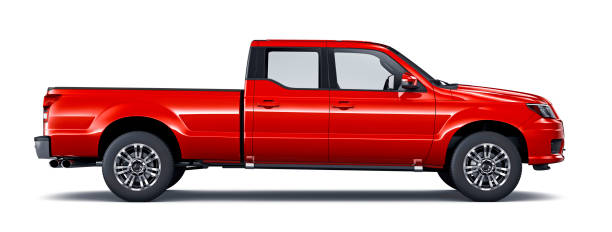
Proper Victorian maidens were told a permissible remark to their dinner partner was “The weather is seasonable for this time of year. Don’t you think so?” The knowledge of weather in places we are has always been needful and necessary to those who are farmers or sailors or planners of outdoor picnics. In recent years, what it is like in other place has because more possible to know and has increased in importance. Every phone conversation with my dad began with the question, “What’s your weather like.” It sounded as if I were personally responsible. Not until we had compared south Louisiana with Houston, Texas, could we more on to another topic, like his grandchildren.

Early guessing of weather was iffy at best- and in some cases still so. A few of the ideas were pure superstition. There is a scientific reason for Red sky at night, sailors’ delight. Red sky in the morn, sailors take warn. I doubt that the man quoting those words knew why they were to be trusted. The signs were true enough to be repeated and believed. If the crescent moon has enough curve to hold a hunter’s horn, a dry spell is on the way.

First newspapers, then radio, television still in the mix, and now, of course, the internet, supposedly take the guess work out of knowing. However when heavy rain is pelting outside and the voice on the station is saying no precipitation in the forecast, a member of our family declares: “Weathermen don’t have windows.” Some local weathermen, though, do build a certain respect. My mother turned the fire down under supper and went to sit by the TV to hear Nash Roberts at 6:00. He told about New Orleans and then said, “Now the forecast for north of the lake.” Sid Roberts was our children’s favorite mainly because he tracked the course of Santa Claus on Christmas Eve.

Our activities are planned by the probabilities of the day. The temperature may be acceptable, yet mix in humidity, and my walk gets rethought. I made a grocery run to hunker down for Hanna which threaded the needle of the Gulf to rain on us and move on to flood the lower coast. We teach our children the difference in weather and climate. The changes of the later are more dynamic. Ice floes are melting, and polar bears may go the way of dinosaurs. At times in a West Texas drought we ask for more of the wet stuff, and when heavy winds are pushing water down the street our cry is “Enough!” Either way, our only control of weather is a topic of conversation. It’s a gift, and we are thankful.

Be sons of your Father in heaven, for he makes his sun rise on the evil and the good and sends rain on the just and the unjust. Matthew 5:45

Ubiquitous

Ubiquitous comes in multi colors, one material, and slight tweaks in design. The adjective used to be called on to identify phone booths, the ones, usually red, that once appeared on street corners and had a door that closed for privacy and quietness. Now I think it certainly calls to mind those extra yard chairs that can be found on grassy spots, front porches, or even in abandoned lots. Safari has a site for images of plastic chairs and a designation for them. They are defined as monoblocs. When you see a stack, you have no idea where in the world you are.

In the beginning, the first ones were wooden. The slant back and wide arm rests were constructed in 1903 by Thomas Lee for use at his family retreat on Lake Champlain in the Andirondack Mountains, hence the name. They could easily be constructed from 11 pieces of wood. The incline was perfect for moments of doing nothing. David and I even spent mornings in them on a Chesapeak Bay vacation while watching children taking sailing lessons. On the downside, they were cumbersome to move, and swinging legs over the extension for stretching out while pulling yourself up from reclining took more strength than grace.

In the 1960’s, designers started utilizing the material of the future: plastic. Some are still shaped to recline. Some are more chair like and can be pulled around a table if needed. Best of all, they can be stacked and found at hardware chains or mom/pop stores for a reasonable cost. Most are white, yet I’ve seen colors of the rainbow. You almost ignore them until one in an unusual place catches your eye. For a while Jen Thiel collected photos of the chairs. Among the his favorites are one of a plastic chair in a hiking camp on Mount Kilimanjaro, and another taken outside a library in northern Afghanistan of a man sitting on one while toting a gun.

Few lawns in the area I walk are without one – and usually two. I have four green ones that came with the house and two tan ones purchased because they were more upright. Four houses away, a group of young couples bring their chairs to make a large circle in the driveway for virus visiting, sending laughter and voices down the street. I’m tempted to make this a contest. Send in your story or chair picture and win an ice tea bag for participating. Unsettling circumstances still reign, and ordinary work fills a day. In the evening, tasks are completed, the temperature drops, a breeze picks up. The time comes to find a shady spot, take a seat and settle for a rest.

They shall sit every man under his vine and under his fig tree, and none shall make them afraid.

Micah 4:4

Lost and Found

The cry goes through every household with different words. Do you see my phone? Where is my wallet. I know I put my I-Pad right on this shelf. I can’t find my homework? Eventually all turn up. The lost may be right in sight, or under a sheet of paper, or even kicked under the chair. I live in what might be called a five room house, and many a time I get my daily exercise searching for what I just had in my hand. Often it is found after my mind and eye agree on what I am looking for.

Part of my problem is I am not a place for everything and everything in its place person. I plan on being, and my hands let go before the place is reached. The missing magnetic pin cushion is a case in point. Large as a purple donut, it is filled with pins that stay in place even when it is tilted. I brought it from the upstairs garage room to use with masks I was working on at the dining room table. It vanished! I made the circle, uncovered and recovered piles, and went on to another task in frustration. Typing at my desk, my eyes strayed to the back of the recipe box, which was out of place also, and there was the pin cushion. I spent one morning looking for the black cover that identifies my I-Pad, only to realize it was turned over to the silver side and consequently ignored.

The same unfocused looking counts for what I don’t see in people. Once I had a difficult student. I called his name only to correct or redirect or inquire once more about homework. We also had that year a child with problems in vision and movement. We were camping out with a class of 18 and taking a night nature walk. I was concentrating on counting in the dark when I heard a whimper. Child 2 was in a nightmare situation for him. Bushes jumped out to block his way and what vision he had was lost in the dark. Then I heard Voice 1 that I immediately recognized. “Don’t worry. I’m here. Hold my hand, and I’ll tell you where to go.” I found a child that night I never knew existed and looked at him in a new way from that that moment on.

So I’ve lost people by thinking I knew what they were like or where they should belong. Trivial surface sightings can hide pearls of great price. Non-stop gum chewing jaws can recommend poems to keep forever, and the stringy haired teen tosses off fixing my computer with “No sweat.” From finding a misplaced pincushion to the flickering fire in a casual acquaintance, the knowing what is lost and what is really important to find needs to be a focused task The lost and look for stories Jesus told cover them all: the sheep, the coin, and the person. At times, being found may be the blessing for me.

“Rejoice with me, for I have found (my sheep, my coin, my son) which was lost.”

Luke 15:6, 9, 32

I Can Do It

Most of my offerings are memories of a woman of a certain age – I warned you of that in the beginning. Some are of things I notice or I think are of interest. The replies I get mostly are from those nearer my age I connect with. ATTENTION: this one is for those out there who now have children either from baby age to maybe teens. My first piece was about how I was told to be careful when I went out, given a time to be home, and then sent forth. Times are different now and I know it. I also know that the skill of being responsibly independent has to carefully taught. Along with many articles that abound now, here are my opinions.

School is my milieu, and it strains my mind to think how to make it happen on line in an unsure situation. Just remember. What appears as failure sometimes is learning a new skill. Success takes practice. Babies don’t give up walking after the first plop. We offer smiles and a finger to hold and help them try again. I think I would help even the youngest to set a goal. This is what I want to be able to do. Write numbers 1 – 10. Read a page by myself. Answer a thought question in a complete sentence. Their idea of success may not match ours. Forward progress is what counts and is a life skill. Good teachers will take a mix of students and go from there.

I don’t know when Stranger/Danger started. Unfortunately, it’s a fact to be considered. To recognize the signs, one needs to know what safety feels like. Yes, I do know the word “grooming”. Aware of that is part of your responsibility. Children need to know and have the opportunity of practicing social behavior, especially when distancing is a part of everyday life. Opportunities to talk to adults on appropriate topics, looking others in the eye to show you are engaged, and using please and thank you help make contacts more meaningful. You have the gift of being maybe the only example of what trustworthy adults are like.

We all long for time alone. Think how you like to be able to wool gather or take yourself somewhere to be in a different place. Find one little way to provide freedom even with a mask. For peace of mind, a WSJ article listed five tech gadgets to help get in touch with your children when they are out of sight or pinpoint where they are. Even with back up attention, those children feel independent. A neighbor five houses down let her 4 1/2 and 2 1/2 walk down to my house to return a bug box while she watched. They rang the doorbell, moved back to end of sidewalk, and we did the exchange. Then they ran back home calling, “We did it”

Take a moment to think about yourself as an adult. Growing up what were the events that help you now tackle the unusual life of starts and stops and changes since the first of March? What skills do you call on when dealing with people under stressful conditions? How can you build these foundations into your child’s life? This year is a one of growth. Doing it right just may take a little more thoughtful purpose. Wherever you go, you start from here.

Point your kids in the right direction. When they are old, they won’t be lost.

Proverbs 22:6 The Message

That’s Progress

Unfortunately when it comes, we are not always ready to change. If we are the ones who built a better mouse trap, it’s a great idea. It the change is thrust upon us, we wonder if it really helps. This week I thought of skills or improvements that have affected my life. Some I could still welcome; others are dismissed without a care.

The first I thought of was my daddy sitting me down at the dining room table with a variety of brown wrappers and a stack of coins. I realize I have lost some of you already. The task was to count, say, twenty nickels. The trick was to place them intact at the end of a brown wrapper, maintaining the rigidity of that column of coins while tightly rolling the wrapper to the end. If it was done correctly, one of the open slots identified that you had $1.00 worth of counted nickles to take to the bank. A short improvement for a time was the bank having counting machines for a bag of mixed coins. Now the whole process is relegated to a corner of the grocery store. Half dollars have disappeared. What will be the next coin to go?

My other most dramatic one was almost a right of passage. Open gas heaters were in every room. Only adults could light because they were dangerous. The gas identified by the smell that filled the air while you were turning the lever and striking the match could either flash out and burn you or explode and eliminate you. I watched numerous demonstrations before I felt ready to go solo. Truthfully, though I can name several advantages to central heat, I miss that evidence of warmth. To pull a chair close to a visible flame was almost as good as a wood fire, and during that time, I never shivered in a bathroom.

Make your own list. Though sports cars and some trucks still have them, I waste no time longing for a gear shift. High on my delights to have now is a cellphone and an easy voice message. No more running to the “convenient” location to try and answer a call or to have to punch and rewind to maybe hear a message. It may sound like a small step forward, yet I appreciate the person who thought to mark company name and size in the back of various tops instead of a tag I ended up cutting out.

We count on life moving onward. Babies grow and teenagers master driving cars. We learn how to take turns. Progress doesn’t always involve a change in things. In relationships or community, the flow is almost imperceptible turning until we say it didn’t used to be this way. One individual moving toward another individual helps build a new community. An electric knife was an idea, a prototype, a reality. The progress of world changes depends on our vision, and what we do to create a new reality.

For we are laborers together with God. 1 Corinthians 3:9

Forbidden Fruit

“Don’t eat this fruit,” started with Genesis. Nursery tales have Peter Rabbit stealing from Mr. McGregor’s garden. Most coming of age books in the early 20th century, especially if about boys, contain a least one sequence when they sneak into someone’s orchard and swipe apples. At some level, even among the most generous of us, we feel if it is our tree, the fruit it bears is ours. I first felt this affront of my ownership when we moved on Rice Blvd. Outside the kitchen window was a good size plum tree. Through the spring we saw blossoms, green knobs, slight changes in color. By early June, they were almost ready. We made a week-end trip to San Antonio. When we came back, stems were bare or the fruit pecked and left to rot. Squirrels and birds were the culprits. To say I was offended is to put it mildly.

In my walks this summer, I’ve found two examples of trying to protect street side trees. Just around the corner from us, the house has recently landscaped with Louisiana iris, day lilies, and a small tree. As I repeatedly circled the block, I finally realized it was a beginning peach tree. One little bloom, one tiny peach. About the time it got larger and was that glorious mouth watering color of summer delight, a sign appeared. PLEASE LEAVE THE PEACH FOR OUR CHILDREN TO PICK. A later walk showed the peach was gone. The two resident girls were bringing in their bikes one afternoon. “Did you get to pick your peach?” The older scowled while the younger stomped her foot. “NO! Someone got it” I could only hope it turned to dust in their mouth.

The other example I think was to deal with winged and furry creatures. Down the sidewalk ahead of me I noticed an unusual glistening in morning light. I’m not sure of the tree. Around every small possibility, maybe thirty or more, some one had placed a zip lock bag. I guess they serve the same purpose as netting on a tomato plant. The message is sit there and drool. Just don’t eat the produce. Unfortunately, my walks are a random ramble, so I may never know if the owner’s efforts were affective.

Mixed with the desire to enjoy our own fruits is the pleasure we gain to offer by our choice with open hands. Hoarding can sour the harvest. A children’s share song is “The man who has plenty of good peanuts, and gives his neighbors none, Shan’t have any of my peanuts when his peanuts are gone.” The boy across the street brought me two pods of his purple okra. I have my own fruits to share. They are not visible and others never snatch them from me. If I make them available, though, they multiply, and there are enough for everyone.

But the fruit of the Spirit is love, joy, peace, long-suffering, gentleness, goodness, faith, meekness, temperance. Galatians 5:22-23

Bloom/Move

Newton’s third law of motion:  For every action there is an equal and opposite reaction.  During this week, that has been my stable point for some linguistic, philosophical, and theological thoughts. What I’m trying to say now is mostly for me.  I just need to sort and this is my means. I do have some unmoveable beliefs, yet I am also a Jewish rabbi:  On one hand and on the other. In the midst of moral, economic, and health decisions causing pronouncements to be made, I am inclined to look at the other side to find balance. Part of my search involve those verities we call proverbs or adages.  Choose your favorite.  Too many cooks spoil the broth/ Many hands make light work.  Look before you leap/Strike while the iron is hot.

These ruminations started Sunday with a good sermon based on Jeremiah 29:7 -‘ Seek the welfare of the city where I have sent you into exile.”  We are all in exile from what we thought was normal.  Then the pithy saying was “Bloom where you are planted.” The truth in that is doing your best may lead to survival, yet may not be the end of the story.

Charis parable.  A friend gave me some ground orchids with the advice they would spread and give purple delight.  I did some reading and planted them. For two years they produced a bloom, yet nothing like what was promised.  I went to my always next step for puny plants. I moved them.  And lo, it was like a miracle.  The foliage was green and lush and the many amethyst blossoms shone across the whole yard. They had bloomed where they were planted.  They thrived in the right conditions.

I’m trying not to shrivel in these days. I am seeking actions and words that help me and all around me.  Deep inside I know these are not my best blooms, yet they are an offering of possibilities. What I question leads to a right decision and the surety to continue on an opening path.  Or another opposite:  Doubt is the beginning of wisdom/Faith will move mountains. Doing my best where I am, leads to God’s next statement.

For I know the plans I have for you, says the Lord, plans for welfare and not for evil.

Jeremiah 29:11

Nor Rain, Nor Heat

Not official, yet these words are part of the pledge of the postal deliverers. Snow and gloom of night are in there, but the first two are especially true of Houston. I don’t know where you are in life with communication.  I’m right there with some next step items.  No Instagram, yet e-mail does get the word said quickly.  Some use that option or maybe have moved on to texts or some other vocabulary I don’t know. An excitement builds in opening the mail box or hearing a plop on the floor by the door that a faint bing doesn’t begin to match. So cheers for the United States Post Office even as it struggles.

Benjamin Franklin, the crusty pithy colonial Renaissance man, was first connected with a  postal system out of Philadelphia in 1753.  In July, 1775, a colonial postal system was begun with his being the first postmaster general.  For a good part of my life, mail was a way to communicate.  School children were taught the proper way to write various letters from obligatory thank you notes to business letters. Mail came twice a day and once on Saturday, and special stamps were needed the the missile went by plane.  The Post Offices in towns were almost as important a gathering place as one of the local stores.

Letters were treasured.  They contained letterimportant news or words of love to be gathered and tied with a satin ribbon. Today these are considered primary sources for any historical documents. In my mother’s bottom bureau drawer were a gathering from her grandchildren over the years.  A single crayon mark from a young one and several lines slanting downward across a  page telling about a school occasion from a pre-teen boy. Doug gave me a notebook with letters I had written him during an around the world trip thirty years ago. I had to plan ahead for them to reach the receiving point when he was there.

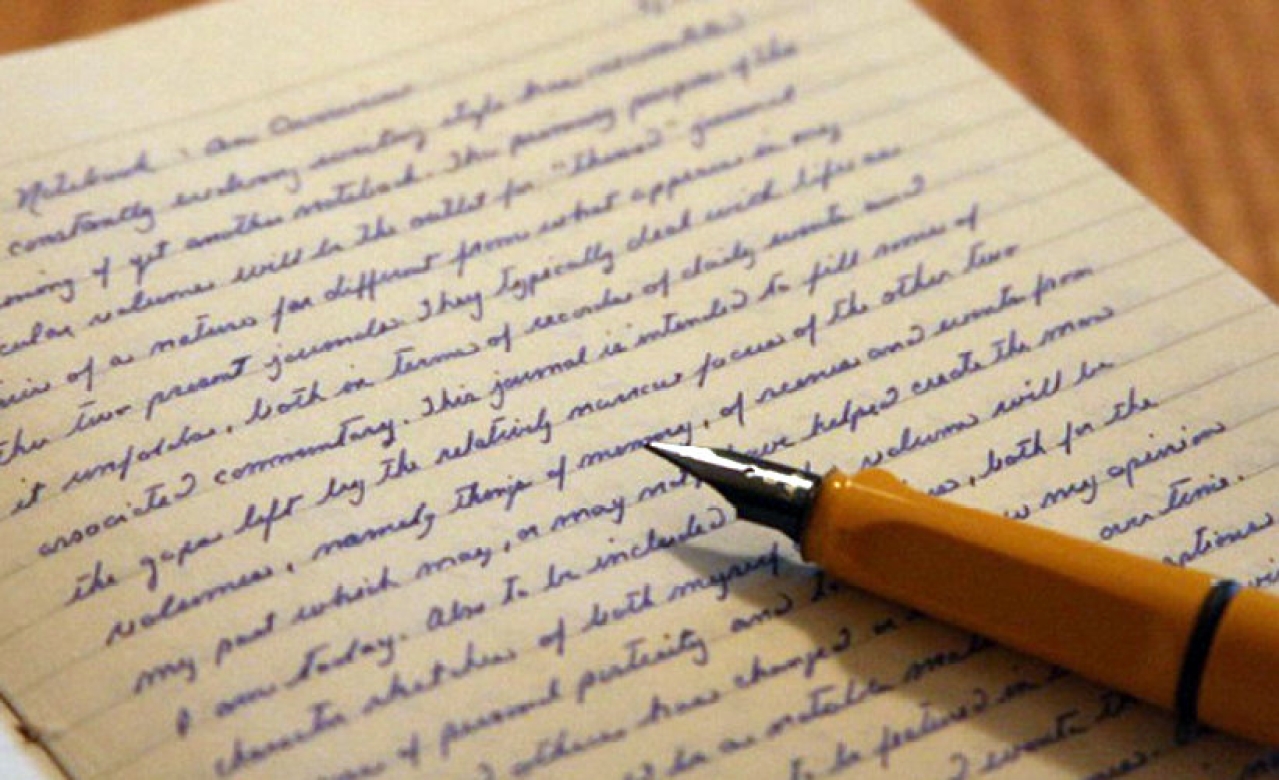
Times exist when the old fashion term of  “I take pen in hand” is still appropriate.  Can one express proper concern for a death or tragedy in a technological manner?  A gift thoughtfully chosen and specifically given almost requires the same attention in a thank you note.  Yes, in these days of separation and quarantine I have typed a keep in touch comment and hit return. More and more though, a note is written when I need to know a person I love picks up the envelope, looks at return address with anticipation, and what my hand sealed their hand opens for their eyes to read what my heart wrote.  Even that doesn’t replace the closeness we yearn for.

Though I have much to write you, I would rather not use paper and ink, but I hope to come to see you and talk with you face to face, so that our joy may be complete.

2 John 2:12


Trucks

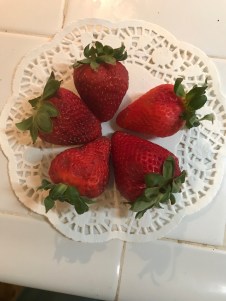
Generic red pickup truck isolated on white backgroundFess up now.  If you have either lived with a person who owned a pick up truck or were yourself that person, the bottom line is it had only a marginal connection with transportation.  The relationship was one of love. Backing it smoothly into a parking place causes people to stop on the sidewalk and watch in admiration. No one leans casually against the rolled down window of a coupe to have a conversation. The one handed wave of a hatted driver to another is most impressive from the height of a F-150 while cruising down an almost empty highway in West Texas. To discuss them one uses words like torque, payload, rugged, capable, and that favorite of teenage boys – dually.
Vehicles in our family were gender specific. After a misadventure with a Simca, the elder of the men bought a blue long-bed (another definitive word) to make the run to the chemical plant.  Fondly it was spoken of as the Blue Whale. In the no seat belt era, two young boys, a wife, and a driver could fit across the front seat and try to avoid bruises from the gear shift. It had a trailer hitch just in case, though the in case never came up.  Its most famous uses were to put boys and friends in the back and bounce around some land we owned west of town and to make exciting trips to the town dump with a load of whatever.

Listing in order doesn’t matter. In ensuing years, one teen made a trip  to Maine to work for the summer.  He had a rumpled second hand tan short bed made for adventures.  Some nights it was his bedroom on the journey north.  He came back with a visor sticker that acclaimed: This Truck Made It To the Top of Mt. Washington. Those words gave me bonus points with 4th graders when I had to borrow it for school one day.  In spite of scruffy appearance, it was broken into and stolen twice.  The last time it was returned with a bed full of pumpkins. Had it been especially chosen for an October nefarious activity?

Equal time now for the other boy who is most hard core about trucks.  At this point I have lost track of the number.  Truck #?  is large enough to pull a travel trailer needed for various work occasions.  The most memorable bemoth was purchased with gains from his first job, a massive black two seater designated as The Beast.  It was so high it even had an extra step to reach the running board in order to grab the hand pull and hoist yourself up to the shotgun seat.  It’s very size required reverance.

When I started this I knew there was no Biblical connection, yet maybe there is.  Every trip on the freeway has some truck with family belongings stacked in the bed. These are either tied down or covered with a flapping tarp.  People up front have been called to go forth, and though love may have originated the purpose of purchase, transportation is what is required, and the time of camels has passed.

So Abram took Sarai his wife, and Lot his brother’s son, and all their possessions with them which they had gathered.  Genesis 12:4

Strawberries

IMG_2398For most of my life, food, especially fruit,  appeared in season and was grown locally.  Oranges came from Buras in Plaquemines Parish.We drove down in early December to buy a crate. One of them was a treat in the toe of my Christmas stocking.  I knew of cherries, yet never ate an uncanned one until I was a sophomore in high school, and we took our one vacation trip toward the northwest.  The highlight of any year was April and May when strawberries came in season in Tangipahoa Parish.  I don’t like the artificial flavor; however, homemade ice cream, sliced over hot pound cake, and just held by the stem for a delicious nibbling while red juice dribbles on your chin is akin to the ambrosia of a heavenly meal.

The season was coming on when we drove out of town (not difficult to do) and saw workers in the field bending over green plants, turning back leaves to find the red ripe berries.  One had to have light hands and a good eye.  Ripening stops when they are picked and they are fragile to ship, so a perfect careful choice was necessary for each berry.  Workers took their field baskets to the sorting sheds where another group carefully divided by size and ripeness. Those worthy to be sold to commercial buyers were packed in a crate, sixteen pints in two layers.  Less than their best went to be sold at a roadside stand.

In Hammond ,through the month, auctions were held in the Log Cabin, a structure near the railroad station.  A farmer would declare how many crates he had ready for shipping. Stores and distributers would make bids with the auctioneer fanning the price until a gavel ended that lot.  Daddy taught sons of farmers, so he would drive out, lean on a fence, make a deal and bring home a crate from that morning’s picking. When I taught in the northern part of the state, Daddy would put a crate on the last train and call me to be at the station at daybreak.  The redolent smell of ripeness filled the space between the clerk’s hands and mine.

The heart shape of the berry adds to its attractiveness.  Chocolate covered strawberries are as good as roses for Valentine’s Day. A Cherokee legend matching Adam and Eve says the couple quarreled, and the woman angrily walked out.  The man could not catch up.  To slow the woman down, the Great Spirit had berries grow along her path. Because she stopped to pick and eat, the man could catch up.  Her anger forgotten, they returned to their home where they lived out their days in peace, happiness, and love. With year around availability, all sorts of good things can happen.

And God said, “I have given every green plant for food…..and behold, it was very good.”

Genesis 1: 30 – 31